Source Surface Mount Dip Switch for Communication, Home, Vehicle
Find 30 surface mount dip switch options for communication, home, and vehicle applications. Buyers can compare specifications, certifications, and pricing from verified Chinese manufacturers offering customization and standard packing.
Key considerations
Products List




Comprehensive Sourcing Guide
Strategic Sourcing Guide for Surface Mount and DIP Switches
Navigating the global market for switching components requires a precise understanding of the distinction between surface mount and dual in-line package (DIP) technologies, as well as the specific application environments where these components operate. The core keyword "surface mount dip switch" often conflates two distinct mounting methodologies, yet modern procurement strategies must address both to ensure supply chain resilience. Buyers must recognize that while some components are designed specifically for surface mount technology (SMT) to reduce board space, others retain the traditional DIP form factor for through-hole mounting, offering distinct advantages in prototyping and high-reliability applications. This guide synthesizes observed market data to provide a framework for evaluating suppliers, verifying compliance, and managing costs without relying on unverified claims or specific vendor recommendations.
Technical Specifications and Form Factor Analysis
The fundamental decision in sourcing these components lies in the physical mounting configuration and the electrical characteristics defined by the product model. Market observations indicate a clear divergence between models designed for general communication and those tailored for specific mechanical applications. For instance, specific product lines are identified by model numbers such as "Switch 001" and "DS-09R," which often feature a "Side Type" toggle mechanism and are supplied in "Tube or reel packing." The "Tube" packaging is typically associated with through-hole DIP switches, where the components are inserted into drilled holes on the printed circuit board (PCB), while "reel" packing is the industry standard for surface mount devices to facilitate automated placement.
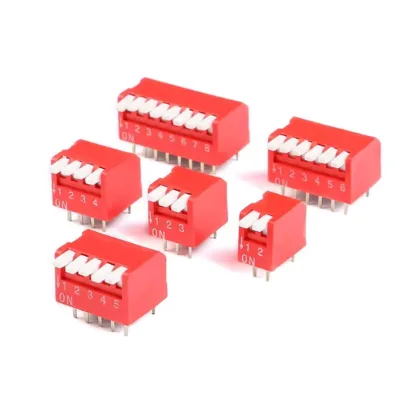
When evaluating technical specifications, buyers must scrutinize the "Pins" attribute. The observed data highlights "DIP" as a primary pin configuration, which implies a dual in-line package suitable for manual or semi-automated assembly. In contrast, surface mount variants would require specific footprint definitions not explicitly detailed in the general observations but implied by the "reel" packaging standard. Electrical ratings are equally critical; specific models like "BS-2024A" and "MRS-101-8" are noted with usage spanning "Vehicle, Communication, Machinery, Electrical Appliance, Digital Products, and Toys." This broad applicability suggests that the internal switching mechanism must handle varying load conditions. For example, certain magnetic contact switches, such as the "BS-2027A" and "BS-2026," are rated with a "Maximum Switching Voltage" of 100 and a "Maximum Switching Current" of 0.5. These figures represent the operational limits for the reed form contacts (N/O, N/C) and must be strictly adhered to in the design phase to prevent premature failure.
Compliance and Certification Verification
In the B2B electronics sector, compliance is not merely a regulatory checkbox but a critical risk mitigation strategy. The supplied product data reveals a complex landscape of certifications, including "RoHS," "CE," "UL," "cUL," "ISO," and "GS." It is imperative for buyers to understand that these certifications are not universal across all listed products. For example, while "RoHS" appears frequently as a standard attribute, other products carry "ISORoHS" or "CE/UL/ROHS" combined standards. The presence of "ISO" and "GS" certifications on models like "MRS-101-8" indicates a higher level of scrutiny regarding international safety and quality management systems.
Buyers must verify that the specific batch or model they intend to purchase carries the necessary certifications for their target market. The "Standard" attribute often lists "Standard" generically, but specific product lines like "BS-2035" and "BS-2024A" reference "CE/UL/EN" or "CE/UL" as their approved standards. This distinction is vital for products intended for the European Union or North American markets, where "CE" and "UL" are mandatory for electrical safety. Furthermore, the "Certificate" attribute explicitly lists "CE, UL, cUL, RoHS" for certain items, suggesting a comprehensive compliance package. However, buyers should not assume that a supplier offering one certified model automatically certifies all their inventory. Due diligence requires requesting specific test reports or certificates of conformity for the exact model number, such as "DS-09R" or "Switch 001," to ensure the "Standard" and "Certification" attributes match the regulatory requirements of the destination country.
Cost Drivers and Pricing Dynamics
Understanding the cost structure of switching components requires an analysis of the observed price range and minimum order quantities (MOQ). The market data indicates a listed price range of $0.01 to $14.80 USD. This wide variance suggests that cost is driven by factors beyond the basic component type, including the complexity of the switch mechanism, the materials used, and the level of customization. The lower end of the spectrum likely corresponds to standard, non-customized components like basic toggle switches or simple magnetic contacts, while the higher end may reflect specialized models with custom features or higher durability ratings.
The MOQ range observed between 10 and 1000 units further influences the total cost of ownership. A low MOQ of 10 units allows for prototyping and small-batch production, reducing upfront capital expenditure, but it often comes with a higher unit price. Conversely, an MOQ of 1000 units, as seen in products packed in "1000PCS/Carton" or "1000PCS Each Cartons," typically unlocks economies of scale, lowering the per-unit cost. Buyers must balance the need for inventory flexibility against the cost benefits of bulk purchasing. Additionally, the "Customization" attribute being "Available" introduces a variable cost factor. Custom orders, which may involve specific color options like "Black," "Red," or "White/Brown/Grey/Tan," or tailored packing requirements, will invariably carry a premium over standard off-the-shelf items. The "Standard Packing" versus "Packed According to Customers'" options also impact logistics costs, as specialized packaging may require additional handling fees.
Typical Applications and Usage Scenarios
The versatility of surface mount and DIP switches is evident in the diverse applications listed in the product data. These components are integral to systems requiring user input, safety monitoring, or circuit control. The "Usage" attribute explicitly categorizes applications into "Communication," "Vehicle," "Machinery," "Electrical Appliance," "Digital Products," and "Toys." This breadth indicates that the switches are not limited to a single industry but serve as fundamental building blocks across multiple sectors.
For the "Communication" sector, switches like "Switch 001" and "DS-09R" are likely used in devices requiring manual configuration or mode selection. In the "Vehicle" and "Machinery" sectors, the robustness of the switch is paramount. Models such as "BS-2024A" are specifically noted for use in these environments, where vibration and environmental exposure are significant concerns. The "Anti-Theft Alarm" application, associated with the "Screw Mount Contact Switch Magnetic Switch Normall," highlights a safety-critical use case where the "Loop Type" (Closed, Open) and "Reed Form" (N/O, N/C) are critical for security system functionality. These switches are designed to detect the opening of windows or doors, triggering an alarm when the magnetic loop is broken. The "Home" application for models like "BS-2035" further emphasizes the need for reliable, low-power switches in consumer electronics. Buyers must align the switch's mechanical and electrical ratings with the specific demands of the application, ensuring that the "Maximum Switching Voltage" and "Current" are sufficient for the intended load.
Supplier Evaluation and Origin Considerations
When evaluating potential suppliers, the origin of the product is a key factor in the supply chain strategy. The data consistently points to "China" and specifically "Ningbo China" as the primary points of origin. Ningbo is a major manufacturing hub known for its expertise in electronics and electrical components. While the "Location" attribute confirms the origin, buyers should verify the specific manufacturing capabilities of the supplier beyond the country of origin. The "Condition" attribute noting "Used" for some items suggests that the market includes refurbished or surplus components, which may be suitable for non-critical applications but require rigorous testing for safety-critical uses.
Supplier reliability is further assessed through their "prod_packing" and "prod_standard" attributes. Suppliers offering "Standard Export Carton" or "Tube or reel packing" demonstrate an understanding of international logistics requirements. The availability of "Customization" is another indicator of a supplier's flexibility and technical capability. A supplier that can accommodate specific color requirements (e.g., "White, Brown," "Black," "Red") or custom packing instructions is likely more responsive to unique project needs. However, buyers must be cautious of suppliers who claim broad customization without providing clear lead times or quality assurance processes. The "Standard" attribute, which varies from generic "Standard" to specific "CE/UL/EN," should be used as a baseline for evaluating the supplier's commitment to quality standards.
Quality Control and Long-Term Procurement
Ensuring long-term procurement success requires a robust quality control (QC) framework. The "Closed Gap[Inch(mm)]" specification of "1(25)" for certain magnetic switches is a precise mechanical parameter that must be verified during the QC process. Deviations from this specification can lead to false alarms or failure to trigger in security applications. Similarly, the "Reed Form" (N/O, N/C) must be tested to ensure the switch operates as intended under various conditions. The "Loop Type" (Closed, Open) is another critical parameter that affects the overall system logic.
For long-term procurement, buyers should prioritize suppliers who offer consistent quality and reliable lead times. The "Standard" and "Certification" attributes serve as indicators of a supplier's adherence to industry norms, but ongoing verification is necessary. Buyers should establish a protocol for periodic audits of the supplier's production line and quality control records. Additionally, the "Condition" of the product should be clearly defined; while "Used" items may be cost-effective, they carry higher risks for critical applications. For long-term projects, sourcing new, certified components with full traceability is generally the safer strategy. The "Standard Packing" or "Standard Export Carton" options should be evaluated for their ability to protect the components during transit, especially for sensitive electronic parts.
Comparative Analysis of Product Attributes
To facilitate decision-making, the following table summarizes the key attributes observed in the market data, highlighting the variations that buyers must consider when selecting a specific component.
| Attribute Category | Observed Variations | Implication for Sourcing |
|---|---|---|
| Mounting Type | DIP, Side Type, Surface Mount (implied by reel) | Determines PCB design and assembly method. |
| Color Options | Black, Red, White, Brown, Grey, Tan | Affects aesthetic integration and user interface design. |
| Certifications | RoHS, CE, UL, cUL, ISO, GS, ISORoHS | Must match target market regulations; not all products have all certs. |
| Packaging | Tube, Reel, 1000PCS/Carton, Standard Export Carton | Influences logistics, automation compatibility, and MOQ. |
| Usage | Communication, Vehicle, Home, Anti-Theft, Toys | Dictates the required durability and electrical ratings. |
| Electrical Ratings | Max Voltage 100, Max Current 0.5 | Critical for circuit design; must not be exceeded. |
| Origin | China, Ningbo China | Affects lead times, tariffs, and supply chain proximity. |
Conclusion
Sourcing surface mount and DIP switches requires a meticulous approach that balances technical specifications, compliance requirements, and cost considerations. The market data reveals a diverse range of products, from basic toggle switches to specialized magnetic contacts, each with unique attributes regarding mounting, certification, and application. Buyers must navigate the complexities of varying certifications, such as "RoHS," "CE," and "UL," ensuring that the selected components meet the regulatory standards of their specific markets. The wide price range and MOQ variability necessitate a strategic approach to inventory management, balancing the need for customization with the benefits of bulk purchasing. By rigorously evaluating suppliers based on their origin, quality control processes, and ability to meet specific technical requirements, buyers can secure a reliable supply of high-quality switching components. Ultimately, the success of the procurement process depends on a clear understanding of the product attributes and a commitment to verifying every claim against the actual product data provided.
FAQs
What certifications are available for surface mount dip switches?
Available certifications include RoHS, CE, UL, cUL, ISO, and GS. Specific models may carry combined standards like CE/UL/ROHS or ISORoHS. Buyers must verify the exact certificate for the intended model number to ensure compliance with target market regulations.
Which customization options exist for these switching components?
Customization is available for color, packing, and specific model configurations. Options include colors like black, red, or white, and packing methods such as tube, reel, or custom cartons. These tailored requests may affect lead times and unit pricing compared to standard inventory.
Can I find surface mount dip switches with specific pin types?
Yes, DIP pin configurations are explicitly available for through-hole mounting. These components are typically supplied in tubes or reels to facilitate assembly. The pin type determines the physical mounting method on the printed circuit board for the specific application.
What is the price range for surface mount dip switches?
The observed price range spans from 0.01 to 14.8 USD per unit. Costs vary based on customization, certification levels, and order volume. Lower prices typically apply to standard items, while specialized models with custom features command higher rates.
How does the minimum order quantity affect procurement?
Minimum order quantities range from 10 to 1000 units depending on the supplier and product. Lower MOQs support prototyping, while higher volumes often reduce unit costs. Buyers should balance inventory needs against the cost benefits of bulk purchasing to optimize total expenditure.
Where are these switches typically manufactured?
Products originate primarily from China, with specific hubs like Ningbo noted. This location influences logistics and lead times for international buyers. Suppliers from this region often provide standard export packaging to ensure safe transit of electronic components.
What usage scenarios support these switching components?
Applications include communication, vehicle, machinery, and electrical appliances. Specific models serve anti-theft alarms or home security systems. The broad usage range requires selecting switches with appropriate voltage and current ratings for the specific load environment.